
How To Clean and Protect Your Boat’s Gelcoat Like a Pro
How To Clean and Protect Your Boat’s Gelcoat Like a Pro
Your boat’s gelcoat does more than make it look good—it protects the hull from sun exposure, salt, and water intrusion. Without proper care, gelcoat can fade, oxidize, and lose its glossy finish far sooner than it should.
The good news? With the right process and a little consistency, you can clean and protect your boat’s gelcoat like a professional and keep it looking new for years.
What Is Gelcoat and Why It Needs Special Care
Gelcoat is a protective outer layer applied to fiberglass boats. It’s durable, but not invincible.
Over time, gelcoat is affected by:
-
UV rays
-
Saltwater and minerals
-
Dirt and pollution
-
Improper cleaning products
Neglecting gelcoat maintenance leads to oxidation, dullness, staining, and surface damage.
Step 1: Rinse the Boat Thoroughly
Before using any cleaners, rinse the entire hull with fresh water.
This removes:
-
Loose dirt and debris
-
Salt residue
-
Sand and grime
A thorough rinse prevents scratching during the cleaning process.
Step 2: Wash With a Marine-Safe Cleaner
Never use household detergents on gelcoat. They strip protective layers and cause fading.
Instead:
-
Use a cleaner formulated specifically for boats
-
Wash from top to bottom
-
Use a soft brush or microfiber mitt
-
Rinse thoroughly as you go
This safely lifts dirt without damaging the surface.
Step 3: Remove Stains and Oxidation
If your gelcoat looks chalky or discolored, oxidation has already started.
To address this:
-
Use a gelcoat-safe oxidation remover
-
Apply evenly using a foam or microfiber pad
-
Work in small sections
-
Buff gently until the surface brightens
Severe oxidation may require polishing or professional attention.
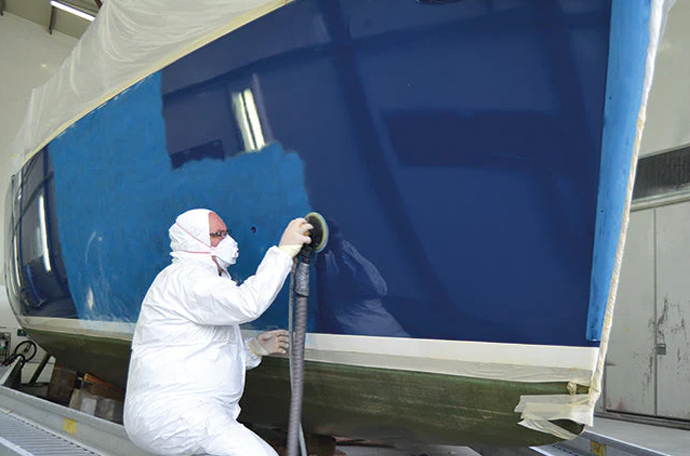
Step 4: Polish to Restore Shine
Polishing helps restore depth and gloss to gelcoat.
-
Use a marine polish designed for fiberglass
-
Apply with a dual-action or rotary polisher if available
-
Keep pressure consistent
-
Wipe off residue with a clean microfiber towel
Polishing prepares the surface for long-lasting protection.
Step 5: Apply Marine Wax or Sealant
Waxing is one of the most important steps in gelcoat protection.
Benefits include:
-
UV protection
-
Easier future cleaning
-
Enhanced shine
-
Reduced oxidation
Apply wax evenly, allow it to haze, then buff to a glossy finish.
Step 6: Protect High-Exposure Areas
Certain areas wear faster than others.
Pay extra attention to:
-
Bow and waterline
-
Areas near exhaust outlets
-
High-traffic deck surfaces
These spots may need more frequent waxing and inspection.
Step 7: Maintain Your Gelcoat Regularly
Consistent maintenance prevents major restoration work.
Best practices:
-
Rinse after every outing, especially in saltwater
-
Wash monthly or as needed
-
Wax at least twice per year
-
Store the boat covered when possible
Routine care keeps your gelcoat looking professional year-round.
Common Gelcoat Cleaning Mistakes to Avoid
-
Using abrasive pads or brushes
-
Applying cleaners in direct sunlight
-
Skipping wax after polishing
-
Using household cleaners
-
Waiting too long to address oxidation
Avoiding these mistakes extends the life of your gelcoat.
Final Thoughts: A Clean Boat Is a Protected Boat
A well-maintained gelcoat doesn’t just look better—it lasts longer and protects your investment.
By following these professional cleaning and protection steps, you’ll maintain a deep shine, reduce long-term damage, and keep your boat looking its best every season.
A little effort goes a long way when it comes to gelcoat care.
FAQ
Q: How often should I clean my boat’s gelcoat?
A: Rinse after every use and wash monthly or as needed.
Q: Can oxidized gelcoat be restored?
A: Yes. Light oxidation can be removed with cleaners and polish; heavy oxidation may require compounding.
Q: Is waxing really necessary for gelcoat?
A: Yes. Wax protects against UV damage and slows oxidation.